
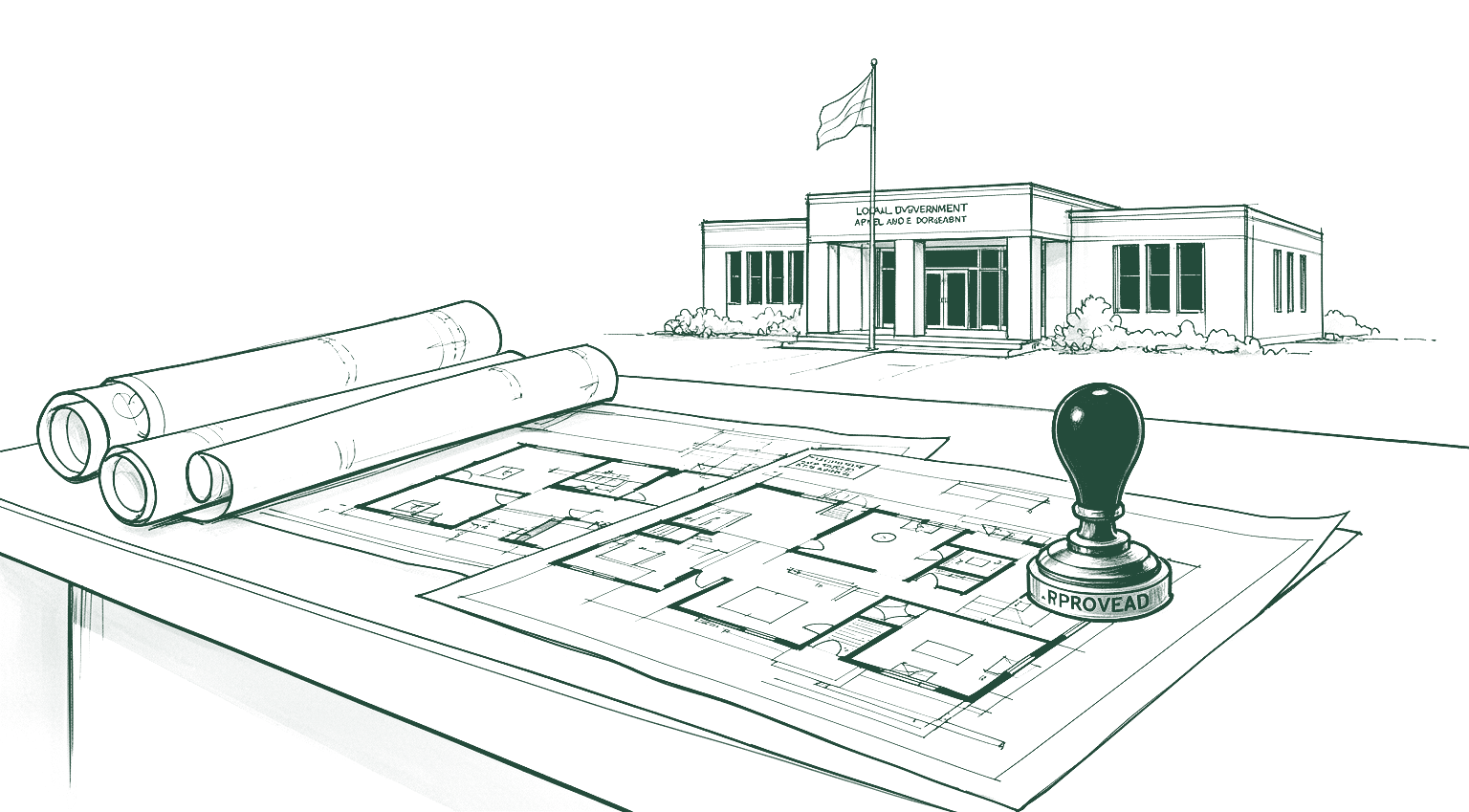
Two parallel tracks, not one queue
The first thing to untangle is that 'council approval' is usually shorthand for two separate questions. Planning approval asks whether a project is acceptable in principle — whether it fits the zone, the setbacks, the streetscape and the character of its surroundings. Building approval asks a different question entirely: whether the thing can be built safely and whether it meets the technical codes. In some areas the same authority looks after both; in others they are entirely separate processes with different people, different rules and different timelines.
Planning generally comes first, because it decides what is allowed at all. Building rules then govern how the finished thing is put together. When you are not sure which of the two you are actually waiting on, it is easy to chase the wrong person, or to read a set of requirements as applying to the wrong stage. Naming which track you are in is the first step to making the whole thing legible, and it immediately tells you what kind of information is worth gathering next.
What actually slows an application down
Most delay is not an assessing authority being difficult. It is information arriving in the wrong order. A survey that has not been done yet. A setback that should have been anticipated in the design but was not. A referral to an authority nobody expected, triggered late in the process. Each of these sends a file back around a loop that could have been shortened much earlier. A resubmission that loops back for a simple clarification and then returns to the bottom of a queue is time that no amount of effort at the end can claw back.
Some factors sit outside anyone's control: public notification periods, the response time of a referral, the workload of whoever is assessing the file. Others are very much within reach — whether the drawings say clearly what they need to, whether the right questions were asked at the outset, and whether the design has already addressed the likely sticking points instead of meeting them for the first time at submission. The controllable half is where experience shows up.
Where submission experience changes things
Our habit is to read the relevant requirements before we lock in design decisions. Setbacks, overshadowing and streetscape become part of the conversation early, rather than a discovery made after the drawings are finished. We prepare documentation at the level each application asks for, and we make the purpose of every sheet clear so that nothing in the package is there by accident.
None of that means we can promise an outcome. Approval is a decision made by an assessing authority, and no one should guarantee it. What careful preparation does is remove the part of delay that comes from avoidable gaps, and keep you clear on which track you are in and what that track is waiting for at any given moment.
What you can read for yourself
Before you engage anyone, the planning scheme and the building rules that apply to your site are public documents. You do not need to become fluent in them — that is part of why you bring someone in — but even a quick read of your site's zone and any overlays often explains why one neighbour was approved and another was not, and which questions are likely to surface down the track. A little reading up front tends to make the first conversation with a designer more useful, because you already know which track your project sits on.
If you take one thing from this piece, let it be this: separate the two questions. Ask which approval is being discussed, what it depends on, and what would move it forward. Clarity about the process is rarely the exciting part of a project, but it is the part that keeps everything else from stalling.